PhD Study in the Age of AI
Workshop on AI in higher education and research at AGH University of Krakow (29-31.10.2026)
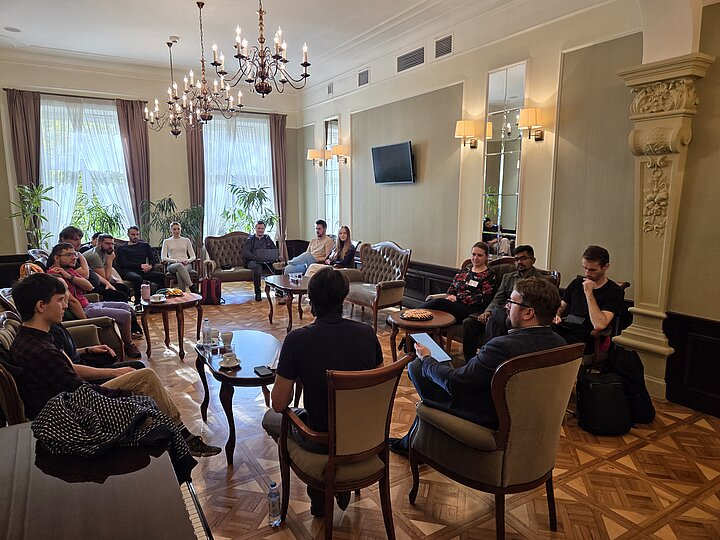
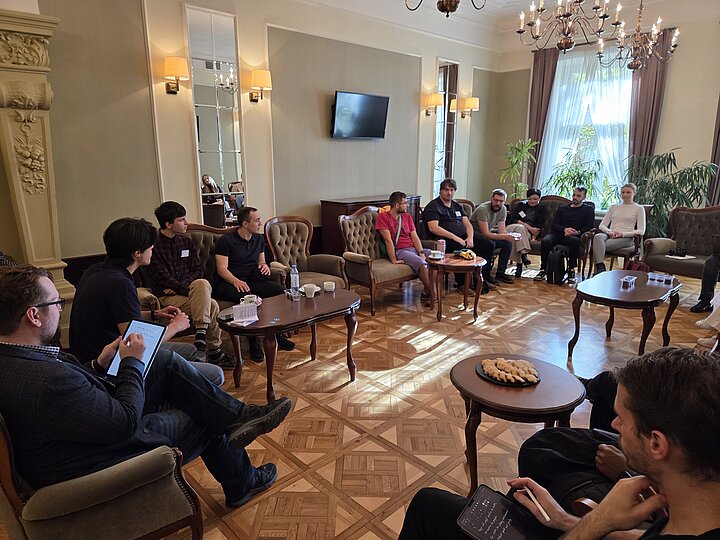
As part of the workshop, a dedicated Ph.D. Forum was organised under the title “PhD Experience in the Age of AI: Tools, Practices, and Challenges across V4 Universities.” The forum lasted approximately two hours and brought together doctoral students from four V4 universities: AGH University of Krakow, Poland; Tomas Bata University in Zlín, Czech Republic; Eötvös Loránd University, Hungary; and Pavol Jozef Šafárik University in Košice, Slovakia. Its main aim was to create a space for PhD students to exchange experiences, reflect on current academic practices, and discuss how artificial intelligence is influencing doctoral research, teaching, collaboration, and everyday academic life.
The discussion showed that PhD students across the participating universities already use a wide range of digital and AI-supported tools in their work. These included general-purpose AI assistants such as ChatGPT, Claude, Gemini, Copilot, DeepSeek, Perplexity, Grok, and Ollama, as well as research, coding, and productivity tools such as Zotero, VS Code, HuggingFace, Kaggle, Web of Science, Notion, Consensus, TensorBoard, Gamma, Spline, and GoodNotes. Participants described these tools as useful for literature review, coding, writing, idea development, teaching preparation, data analysis, and communication.
A key part of the forum focused on the institutional context of AI use. Participants compared the resources available at their universities, including access to high-performance computing infrastructure, computing grants, AI-related courses, institutional policies, guidelines, training sessions, and licenses such as Copilot. The discussion revealed that support differs across institutions. Some universities already provide policies or AI-use courses, while others rely more on case-by-case regulation or are still developing formal guidance.
The forum also highlighted several shared challenges. Participants noted that AI is changing academic communication, with a shift toward more text-based interaction through email, Teams, and similar platforms, sometimes at the expense of face-to-face communication. They also discussed differences between younger and older academic staff in their openness to AI, the lack of motivation among some teachers to adopt new tools, and uncertainty about how AI should be integrated into teaching and research. Another recurring theme was the need for clearer guidelines on responsible AI use, especially in relation to student work, supervision, research integrity, and academic writing.
Participants identified several forms of support that would be valuable in the future. These included more AI-related courses for teachers and PhD students, practical seminars, institutional communication platforms, workshops with other PhD students, and clearer university-level recommendations on the use of large language models. The discussion suggested that doctoral students see AI not only as a technological tool, but also as a factor reshaping academic culture, expectations, and professional development.
Overall, the Ph.D. Forum was received very positively by the participants. The students appreciated the opportunity to meet peers from other V4 universities, compare institutional experiences, and openly discuss both the benefits and challenges of AI in doctoral education. The atmosphere of the forum was active and constructive, and participants seemed to value the format as a useful space for reflection, networking, and shared learning. The strong positive response suggests that similar forums could be a valuable component of future workshops and international doctoral activities.
Coming soon…