Skip to content Skip to footer

Research teams

Image Analysis and Augmented Reality Team

Team members:
Prof. Michal Pluháček
Prof. Wojciech Chmiel
Prof. Zbisław Tabor
Prof. Wadim Wojciechowski
Anna Wójcicka, PhD

Andrzej Brodzicki, MSc. (PhD student)
Dariusz Kucharski, MSc. (PhD student)

The research team consists of specialists in the field of advanced image analysis and processing methods, 3D modeling, process optimization and creating solutions using augmented reality (AR) techniques. The main field of the team's research is the design and implementation of innovative algorithmic and hardware solutions supporting, among others, industrial processes and medical procedures. The implemented solutions use both classical methods, based on created mathematical models, as well as methods using artificial intelligence. The team is engaged in 3D modeling and building and developing systems using augmented reality in various fields. The conducted research uses the latest theoretical achievements and technical solutions.

Prof. Michal Pluháček Received his Ph.D. degree in Information Technologies from the Tomas Bata University in Zlin, the Czech Republic in 2016 with the dissertation topic: Modern method of development and modifications of evolutionary computational techniques. Currently works as a researcher at the Regional Research Centre CEBIA-Tech of Tomas Bata University in Zlin. He is the author of many journal and conference papers on Particle Swarm Optimization and related topics. His research focus includes swarm intelligence theory and applications and artificial intelligence in general. In 2019, he finished six-months long research stay at New Jersey Institute of Technology, USA, focusing on swarm intelligence and swarm robotics. He became an assoc. prof. in 2023 after successfully defending his habilitation thesis on the topic „Inner Dynamics of Evolutionary Computation Techniques: Meaning for Practice.“

Prof. Wojciech Chmiel, is a graduate of the Faculty of EAIiE (currently Faculty of Electrical Engineering, Automatics, Computer Science, and Biomedical Engineering) of the AGH University of Kraków, where he is currently employed as a professor of the university in the Department of Automatic Control and Robotics. He obtained his MSc degree in Electronics (specialisation: Automation), his PhD degree in Automation and Robotics and his habilitation degree at the AGH University of Krakow in the discipline of Automation, Electronics and Electrical Engineering. He currently heads the Operations and Systems Research Laboratory, which is part of the Department of Automatic Control and Robotics. His scientific activity is related to such areas as operational research - in particular modelling and optimisation of NP-hard problems, as well as application of artificial intelligence algorithms in medicine. His research is also related to modelling of real industrial issues, optimisation of production, process management systems, optimisation of logistic processes and traffic optimisation. He is the author of publications in the field of machine learning, as well as the application of FCM (Fuzzy Cognitive Maps) networks for risk analysis in traffic surveillance and prediction systems. He is the author of theorems on the properties of the Quadratic Assignment Problem, as well as theorems supporting decision-making in systems where uncertainty is described by interval arithmetic. Wojciech Chmiel, Ph.D., has several decades of experience in directing commercial and scientific projects abroad (USA, Germany, Austria), as well as in Poland, where, in cooperation with such international companies as Doosan and Altrad, he implemented projects integrating process management systems with augmented reality.

Anna Wójcicka, PhD, is a Doctor of Computer Science, Assistant Professor in the Department of Automatic Control and Robotics at AGH University of Krakow in the Machine Vision Group. She has participated in numerous scientific and commercial projects at national and international level - NCN and NCBiR, e.g. SIMS, FNP/SKILLS, FastTrac/TechVenture. Graduate of the TOP 500 Innovator programme at Stanford University, USA. She is passionate about computer vision and the use of artificial intelligence methods to solve a variety of problems in both medicine and materials engineering. Her research focuses on finding innovative ways to use these technologies in practice, both in science and business.

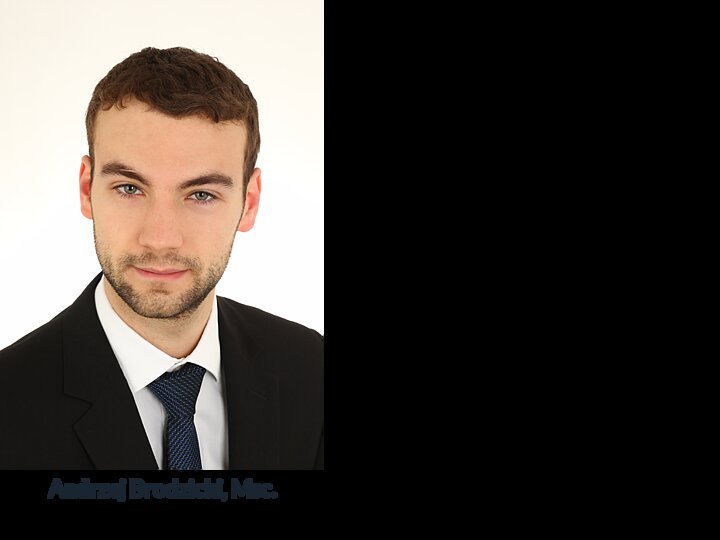
Andrzej Brodzicki, MSc, conducts research in the area of using machine learning methods to analyse medical images, in particular images of skin, lung and liver tumours, diabetic foot and fluorescence microscope images. He carries out implementation projects in collaboration with Manchester Metropolitan University and Stanford University. Author of 15 scientific publications. He is passionate academic in the fields of Automation and Robotics, Computer Science and Biomedical Engineering.

Sahu, G., Seal, A., Jaworek-Korjakowska, J., Krejca, O.: Single Image Dehazing via Fusion of Multilevel Attention Network for Vision-Based Measurement Applications,  IEEE Transactions on Instrumentation and Measurement, Volume 72 (2024)

N. Jalal, M. Śliwińska, W. Wojciechowski, I. Kucybała, M. Rozynek, K. Krupa, P. Matusik, J. Jarczewski, Z. Tabor: Evaluating Uncertainty Quantification in Medical Image Segmentation: A Multi-Dataset, Multi-Algorithm Study. Applied Sciences 2024, 14, 10020

CoInNet: a convolution-involution network with a novel statistical attention for automatic polyp segmentation / Samir Jain, Rohan Atale, Anubhav Gupta, Utkarsh Mishra, Ayan Seal, Aparajita Ojha, Joanna JAWOREK-KORJAKOWSKA, Ondrej Krejcar // IEEE Transactions on Medical Imaging ; ISSN 0278-0062. — 2023 — vol. 42 iss. 12, s. 3987–4000. — Bibliogr. s. 3999–4000

CompLung: comprehensive computer-aided diagnosis of lung cancer / Adam Pardyl, Dawid Rymarczyk, Joanna JAWOREK-KORJAKOWSKA, Dariusz KUCHARSKI, Andrzej BRODZICKI, Julia LASEK, Zofia SCHNEIDER, Iwona Kucybała, Andrzej Urbanik, Rafał Obuchowicz, Zbisław TABOR, Bartosz Zieliński // W: ECAI 2023 : 26th European Conference on Artificial Intelligence : including 12th conference on Prestigious Applications of Intelligent Systems (PAIS 2023) : September 30 - October 4, 2023, Kraków, Poland : proceedings

Anomaly Detection and AI Security Team

Team members:
Prof. Joanna Jaworek-Korjakowska
Prof. Adrian Horzyk
Prof. Tomasz Szumlak
Bartłomiej Moniak, MSc.
(PhD student)
Damian Płóciennik, MSc. (PhD student)
Michał Piekarski, MSc. (PhD student)
Wojciech Gomułka, MSc. (PhD student)

The team deals with the subject of modeling patterns and anti-patterns in order to find frequent and recurring events, but also rare and different ones, which is of particular importance for physicists and for automatic observation, evaluation, clustering and classification of huge portions of data collected in CERN experiments. The team deals with the study of the quality of acquired data, as well as detection of interesting events that may appear. The research uses known methods and those developed by the team based on artificial intelligence, neural networks, data mining and knowledge modeling.

Prof. Joanna Jaworek-Korjakowska - Univ. Professor, Director of the Center of Excellence in Artificial Intelligence and Deputy Head of the Department of Automatic Control and Robotics at the AGH University of Krakow. In 2019 she obtained Habilitation in the field of technical sciences with emphasis in artificial intelligence. She is an expert at the Confederation of Laboratories for Artificial Intelligence Research in Europe (CLAIRE), member of IEEE, Polish Artificial Intelligence Society, and International Dermoscopy Society as well as an alumnus of the TOP 500 Innovator programme at Stanford University, USA. She has been involved in several national (NCN, NCBiR) and international research projects including EPSRC, FAST Healthcare Network Plus, DAAD, National Institutes of Health and NAWA Spinaker, Bekker programs. Prof. Jaworek has been awarded Bekker Fellowship to conduct research at the Stanford University, USA. Her main research interests focus on computer vision, data mining, artificial intelligence especially deep learning methods, anomaly detection as well as clustering. J. Jaworek has been awarded Honorable Mention Award during the CVPR'19 conference (ISIC workshop), MNiSW Scholarships for outstanding young scientists 2017-2020, and Individual award from the AGH-UST Rector for best publishing scientists 2017-2023.

Prof. Adrian Horzyk graduated in computer science from the Jagiellonian University in Krakow, and obtained his PhD and habilitation in computer science from the AGH University of Krakow, where he is currently a professor at the university. He is the author or co-author of more than 200 publications, some of which have appeared in prestigious journals such as IEEE, (h-index 17 (Scopus)). He is also a Senior Member of the IEEE No. 93112804 and a Member of the Asia Pacific Neural Network Society (APPNS) No. 231895. He is a co-founder and member of the Polish Society for Artificial Intelligence since 2009 and a Board Member of the Polish Society for Neural Networks PTSN since 2011. He is deputy team leader of the AGH University of Krakow CERN Alice experiments and projects since 2017.

Prof. Tomasz Szumlak - Head of the Department of Particle Interactions and Detection Techniques at the AGH University of Krakow. After defending his PhD thesis, he worked from 2005 to 2010 at the University of Glasgow as a Research Fellow in the Large Hadron Collider beauty (LHCb) experiment group. In 2010 he obtained the position of Long Term Attached Fellow at CERN. He obtained his Habilitation in High Energy Physics in 2013 at AGH, which was awarded by the Minister. He was awarded the title of Professor in 2022. Since 2014, he has coordinated national grants (NCN and MEiN) for the operation and upgrade of the LHCb experiment and a European project (FNP - POIR) related to the development of a new generation phantom for photon therapy. Prof. Szumlak has conducted pioneering work on applications of computational intelligence techniques to problems in high-energy physics, both related to advanced data analysis and monitoring of the state of trace silicon detectors.

Bartłomiej Moniak, MSc is a graduate of Computer Science and Intelligent Systems with a specialisation in Artificial Intelligence and Data Analysis at the AGH University of Kraków, where he is currently pursuing his doctorate. His current research involves computer vision problems - in particular anomaly detection in data sets. As part of his interests, he promotes modern solutions in the field of artificial intelligence by conducting workshops and educating researchers in various fields, including cyber security and medicine. He continuously strives to expand his knowledge on current AI issues such as ethics, humanity and education by participating in international programmes and conferences.

Damian Płóciennik, MSc, received his master's degree in applied computer science from the AGH University of Kraków, where he is currently a PhD student. His current research includes the development of artificial and computational intelligence methods, particularly in the areas of frequent pattern search and anomaly detection. He has also been a staff associate at CERN since 2023 in connection with his ongoing PhD research. He also has extensive commercial experience as a C++ programmer, working on internationally recognised software in the engineering and medical industries.

Michał Piekarski, MSc is a graduate of Automation and Robotics with a specialisation in Intelligent Control Systems at the AGH University of Krakow, where he is currently pursuing his PhD. Since 2017, he has been working as a Control Systems Engineer at the SOLARIS National Synchrotron Radiation Centre (Jagiellonian University). His main tasks include the development and maintenance of synchrotron control systems and the implementation of AI solutions in them. He actively participates in industry conferences and workshops presenting his and his team's achievements. Research and scientific interests focus on anomaly detection in large research infrastructures.

Wojciech Gomułka, MSc - graduated from the Faculty of Physics and Applied Computer Science, AGH University of Kraków (applied computer science, 2023). He is currently a PhD student at the AGH University Doctoral School. He also has several years of experience in the private sector, as a software engineer in a company related to the automotive industry. His PhD focuses on the application of computational intelligence in the reconstruction of particle tracks in high-energy physics. His main focus is on graph neural networks, the application of which, in this multidisciplinary problem, has been highly anticipated in recent years.

W. Gomułka, T. Szumlak, P. A. Kowalski, T. Bołd Application of graph neural networks in particle track reconstruction

Damian Bulanda, Janusz A. Starzyk, Adrian Horzyk, FlexPoints: Efficient electrocardiogram signal compression for machine learning, ELSEVIER, Journal of Electrocardiology, Volume 88, 2025, ISSN 0022-0736

Development of oxadiazolone activity-based probes targeting FphE  for specific detection of Staphylococcus aureus infections / Jeyun Jo, Tulsi Upadhyay, Emily C. Woods, Ki Wan Park, Nichole J. Pedowitz, Joanna JAWOREK-KORJAKOWSKA, Sijie Wang, Tulio A. Valdez, Matthias Fellner, Matthew Bogyo // Journal of the American Chemical Society ; ISSN 0002-7863. — 2024 — vol. 146 iss. 10, s. 6880–6892

MD-DCNN: Multi-Scale Dilation-Based Deep Convolution Neural Network for epilepsy detection using electroencephalogram signals / Mohan Karnati, Geet Sahu, Akanksha Yadav, Ayan SEAL, Joanna JAWOREK-KORJAKOWSKA, Marek Penhaker, Ondrej Krejcar // Knowledge-Based Systems / Butterworths ; ISSN 0950-7051. — 2024 — vol. 301 art. no. 112322, s. 1–16

Automatic analysis and anomaly detection system of transverse electron beam profile based on advanced and interpretable deep learning architectures / Michał PIEKARSKI, Joanna JAWOREK-KORJAKOWSKA, Adriana Wawrzyniak // Journal of Artificial Intelligence and Soft Computing Research  ; ISSN 2449-6499. — 2024 — vol. 14 no. 2, s. 139-156.

Analysis of deep learning-based frameworks for fault detection in big research infrastructures: a case study of the SOLARIS synchrotron / Michał PIEKARSKI, Joanna JAWOREK-KORJAKOWSKA, Adriana Izabela Wawrzyniak // IEEE Access ; ISSN 2169-3536. — 2024 — vol. 12

Autonomous Vehicles Team

Team members:
Prof. Paweł Skruch
Marek Długosz, PhD
Marcin Szelest, PhD
Dariusz Marchewka, PhD

Mateusz Komorkiewicz, PhD
Tomasz Kryjak, PhD
Kamil Jeziorek, MSc. (PhD student)
Piotr Wzorek, MSc. (PhD student)
Marcin Kowalczyk, MSc. (PhD student)

The research team specializes in developing control systems that increase vehicle autonomy, improve user comfort and driving safety. The team's research focuses on the development of perception systems that monitor both the interior and the surroundings of the vehicle, using a variety of sensors, such as vision cameras, event cameras, radars and lidars. The key element is the fusion of data from these sensors, which allows for obtaining an accurate model of the vehicle's surroundings and interior. The innovative solutions developed by the team have a potential impact on the automotive industry, contributing to the development of future vehicle technologies. Thanks to advanced artificial intelligence and machine learning techniques, the team aims to develop systems that can be widely used in the automotive industry, making autonomous vehicles safer and more reliable in various road conditions. The team's goal is not only to increase vehicle autonomy, but also to increase the comfort and safety of users, which is crucial for the future of transport.

Prof. Paweł Skruch is a specialist in the field of automation and robotics, with extensive academic and industrial experience. He is a graduate of the Faculty of Electrical Engineering, Automatics, Computer Science, and Biomedical Engineering of AGH University of Krakow, where he completed his master's degree with distinction in 2001. In 2006, he was awarded the degree of Doctor of Technical Sciences in the discipline of automation and robotics, also with distinction, and in 2016 the degree of Doctor of Science in the same scientific discipline. Currently, Paweł Skruch, Ph.D., is employed in the Department of Automatic Controls and Robotics at AGH University of Science and Technology as a professor at the university, where he heads the Dynamic Systems and Control Theory Group. He has over 20 years of experience in designing and implementing automation systems. His scientific and research activities focus on the development of advanced control systems with applications in both industry and in the development of autonomous vehicle technology. Dr hab. inż. Skruch is an active member of many national and international scientific societies and organisations, including IEEE, INCOSE, PAU and PTM. He is the main contractor and co-contractor on numerous ministerial and international projects.

Marek Długosz, PhD is a graduate and employee of the Faculty of Electrical Engineering, Automatics, Computer Science, and Biomedical Engineering at the AGH University of Kraków, where he earned his doctoral degree in technical sciences in the discipline of automation and robotics. Dr inż. Marek Długosz is the author or co-author of more than 80 publications including articles, chapters in books and monographs. These works have been repeatedly cited in the world literature (Hirsh index: WoS - 4, Scopus - 6, Google Scholar - 8). Senior Member of IEEE and Chairman of the Board of the Polish Branch of IEEE VTS. Laureate of the Top 500 Innovators programme, as part of which he completed the ‘Design Thinking’ course at Stanford University in Palo Alto and completed a research internship at NASA laboratories located in Mountain View. Supervisor of the Integra Scientific Circle, for which he was repeatedly awarded by the AGH Rector. In 2023, he received an award from the Minister of Education and Science for chairing the Integra Scientific Circle and for outstanding scientific achievements. His scientific interests focus on complex control algorithms in particular in relation to electric drives, room temperature control and more recently in the area of design and control of vehicles and autonomous robots. Together with a team of students, he has designed and realised three autonomous robot designs: ADR, AQUILO and UV-BOT. He is the head of the Artificial Intelligence and Autonomous Vehicles Laboratory Aptiv-AGH, where work and research on the prototype design of an autonomous and electric demonstration car called A-EVE (Autonomous Electrical VEhicle) is conducted. After work, his hobbies include gliding, swimming, skiing and compulsive book reading.

Dariusz Marchewka, PhD obtained his doctoral degree in technical sciences in the discipline of automation and robotics at the Faculty of Electrical Engineering, Automatics, Computer Science and Electronics of the AGH University of Krakow in 2006. From 1996 to 2015, he first worked as an assistant and then (from 2007) as an assistant professor at the AGH University of Krakow. Between 2014 and 2020, he was Technical Director at ONT in Kraków, the Polish distributor of MathWorks software. He currently works as an assistant professor at the Center of Excellence in Artificial Intelligence. His research interests include autonomous systems, modelling and simulation, control and perception systems and the application of AI/ML techniques in the automotive industry. He has been a member of the IEEE and the Polish Section of the IEEE Vehicle Technology Society (IEEE VTS) since 2021.

Mateusz Komorkiewicz, PhD received his MSc (Automation and Robotics) in 2010 and his PhD in 2014 (thesis topic Acceleration of algorithms for object detection, analysis and classification based on video stream in reprogrammable systems) from the AGH University of Krakow.
His research interests include issues of optimising AI solutions for embedded platforms (including SoCs) and customised use of machine learning techniques in the automotive industry.
He is a Senior Member of the IEEE and secretary of the Polish Section of the IEEE Vehicle Technology Society (IEEE VTS).

Robotics and Reinforced Learning Team

Team members:
Prof. Ireneusz Dominik
Krzysztof Lalik, PhD
Maciej Aleksandrowicz, MSc. (PhD student)

The team works on integrating industrial robot control with vision systems using artificial intelligence elements. In currently used industrial solutions, especially in the area of ​​mass production, there are limitations related to, among others, throughput and reliability of quality control systems for products and semi-finished products. This causes the need to use new solutions. Further innovations also concern Bin-Picking technology (picking elements from a box) and Pick&Place (the robot manipulates the picked element and puts it back in a given place) and consist in the use of artificial intelligence in image recognition and robot control. The team also conducts research on the use of neural networks and reinforcement learning, in which the model learns to make decisions through interactions with the environment.

Prof. Ireneusz Dominik is an expert in Industry 4.0 issues. He is a graduate and employee of the Faculty of Mechanical Engineering and Robotics, in the Department of Process Control at AGH, where he received his doctoral degree with distinction in 2007 in the discipline of automation and robotics, and his postdoctoral degree in 2018 in the scientific discipline of mechanical engineering. Currently, dr hab. inż. Ireneusz Dominik is also an employee of the Center of Excellence in Artificial Intelligence, where he is the head of the research group. In addition, he is the head of the ‘Industrial Control Systems’ research team in the Industry 4.0 research group. He works closely with industry performing a number of research and development works, also in the role of an auditor for digitisation and robotisation.

Krzysztof Lalik, PhD, is a specialist in industrial process automation and Industry 4.0. He is a graduate and employee of the Faculty of Mechanical Engineering and Robotics at the AGH University of Kraków. Since December 2014, Dr Lalik has been working as a research and teaching assistant professor in the Department of Process Automation at AGH.
His research work focuses on deep neural networks in control, cobots, stability of systems with neural controllers and underwater surface scanning systems. Since 2024, he is also employed as a senior specialist in the ARTIQ project at the Center of Excellence in Artificial Intelligence, where he works on the integration of inference, learning, optimisation and interpretation.
As part of his organisational activities, Dr Lalik is a member of numerous technical committees and councils, including the Council of the Discipline - Mechanical Engineering at AGH. He is also an active populariser of science. His involvement in the development of Industry 4.0 technology includes the creation of the first Industry 4.0 Laboratory in Poland, in cooperation with leading technology companies. He is the supervisor of the SENSOR Student Scientific Circle, supporting students in their research and scientific activity.

Maciej Aleksandrowicz, MSc. - PhD student, employee of the Center of Excellence in Artificial Intelligence at AGH University of Krakow. Graduate in automation and robotics from Faculty of Electrical Engineering, Automatics, Computer Science, and Biomedical Engineering, robotic programmer with over 5 years of experience specialising in ROS 2, artificial intelligence and industrial robots. He conducts research on reinforcement learning targeting assembly problems using robotic arms. He has participated in numerous R&D projects, including the construction of Krakow's first satellite, KRAKsat. After hours, he co-organises the ‘Cracow Robotics & AI Club’ robotics meetups.

Aleksandrowicz, M., Jaworek-Korjakowska, J.: Metrics for Assessing Generalization of Deep Reinforcement Learning in Parameterized Environments, Journal of Artificial Intelligence and Soft Computing Research, 14(1), 45–61, (2023)

Data Centric AI Team

Team members:
Prof. Leszek Rutkowski
Mateusz Wojtulewicz, MSc. (PhD student)
Filip Noworolnik, MSc. (PhD student)

The team collaborates with dr hab. inż. Piotr Duda on methods of selecting training sequence samples in deep network training, and the entire scope of the Team's interests includes, among others, such issues as: data sampling, data augmentation, data generation, data cleaning, as well as methods related to problems such as "robust model training" and "fair model training". The "data centric" method in machine learning focuses on optimizing the quality of data that is used to train AI models. Instead of focusing solely on algorithms, this method emphasizes improving, cleaning and engineering input data to increase the accuracy and efficiency of machine learning models. In the "data centric" approach, data is considered a key element influencing machine learning results. Good quality data can significantly improve the performance of models, even if the algorithms themselves are not the best selected. This approach is particularly important in cases where collecting more data is difficult or expensive, and improving the existing data set can bring better results, or in a situation where properly selected data allows the training process to be accelerated.

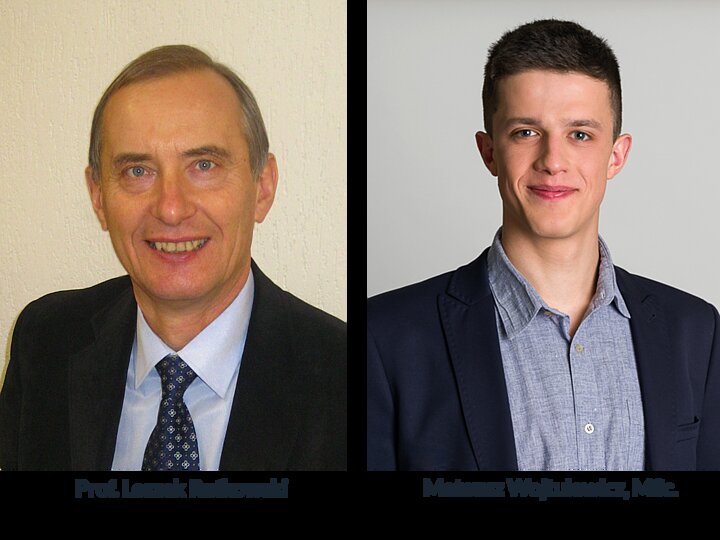
Prof. Leszek Rutkowski is a graduate of the Faculty of Electronics at Wrocław University of Science and Technology, where he also obtained his Ph.D. and habilitation in technical sciences. He was awarded the title of professor at the request of the Scientific Council of the Faculty of Electrical Engineering, Automatics and Electronics at the AGH University of Krakow. Prof. Leszek Rutkowski is the author or co-author of more than 300 publications, of which more than 50 have appeared in very prestigious journals published by the IEEE. These works have been repeatedly cited in the world literature (Hirsch index: Web of Science - 45 , Scopus - 48, Google Scholar - 56). He holds the rank of IEEE Fellow - one of the most highly regarded scientific distinctions in the world. He received this distinction, as stated on the relevant diploma, ‘for contributions to neurocomputing and flexible fuzzy systems’. He is the recipient of many international and national awards for his scientific activities, in particular, in November 2014 he was awarded the honorary Doctor Honoris Causa degree of the AGH University of Krakow, and in 2022 he became a member of the prestigious Academia Europaea.  He is currently working as a professor at the AGH Faculty of Computer Science and at the Institute of Systems Research of the Polish Academy of Sciences, conducting research in the field of machine learning methods and techniques and their applications.

Mateusz Wojtulewicz, MSc, is a graduate of the Computer Science with a specialisation in Data Science at the Faculty of Computer Science, AGH University of Krakow, where he is currently pursuing his doctoral degree. He conducts research in the field of data-driven artificial intelligence, in particular on the use of adaptive sampling techniques in noisy label problems. His PhD research builds on the experience in sampling methods gathered during his master's studies. During his engineering studies, Mateusz with a team of students won 2nd place in the international IEEE Signal Processing Cup competition.

Wojtulewicz, M., Szmuc, T.: Application of Reinforcement Learning in Decision Systems: Lift Control Case Study. Applied Sciences, 14(2), 569, (2024)

Urbańczyk, A., Kucaba, K., Wojtulewicz, M., Kisiel-Dorohinicki, M., Rutkowski, L., Duda, P., Kacprzyk, J., Yew Chong, S., Yao, X., & Byrski, A.: (µ + λ) Evolution Strategy with Socio-cognitive Mutation. Journal of Automation, Mobile Robotics and Intelligent Systems, 18(1), 1-11, (2024)

Duda, P., Wojtulewicz M., Rutkowski, L: Accelerating deep neural network learning using data stream methodology, Information Sciences, Volume 669, 2024, 120575, ISSN 0020-0255, doi.org/10.1016/j.ins.2024.120575

Rutkowska D., Duda P., Cao J., Jaworski M., Kisiel-Dorohinicki M., Tao D., Rutkowski L., Probabilistic Neural Networks for Incremental Learning Over Streaming Data with Application to Air Pollution Monitoring, Applied Soft Computing, Vol. 147

G. Chen, G. Xu, F. He, Y. Hong, L. Rutkowski and D. Tao, "Approaching the Global Nash Equilibrium of Non-Convex Multi-Player Games," in IEEE Transactions on Pattern Analysis and Machine Intelligence, vol. 46, no. 12, pp. 10797-10813, Dec. 2024, doi: 10.1109/TPAMI.2024.3445666

L. Lin, J. Cao, J. Lam, S. Zhu, S. -i. Azuma and L. Rutkowski, "Leader–Follower Consensus Over Finite Fields," in IEEE Transactions on Automatic Control, vol. 69, no. 7, pp. 4718-4725, July 2024, doi: 10.1109/TAC.2024.3354195

Optimization Team

Team members:
Prof. Wojciech Chmiel
Prof. Aleksander Byrski
Prof. Marek Kisiel-Dorohinicki
Prof. Joanna Kwiecień
Paweł Kolendo, MSc. (PhD student)
Mateusz Mastalerczyk, MSc. (PhD student)

The main field of research of the group is the creation of mathematical models and the search for their solutions in the context of defined optimality criteria. The issues studied include both complex production, logistics and control problems, as well as classical optimization problems. The methods used to search for optimal or quasi-optimal solutions take into account specific properties of the problems and various types of quality criteria. Implemented algorithms include exact methods (branch and bound methods, dynamic programming, etc.), as well as approximate algorithms based on the computational intelligence paradigm - evolutionary, swarm, ant, bee algorithms and various types of domain-oriented heuristics. The group conducts research on various types of adaptive methods of machine learning, allowing for the automation of the process of searching for a solution, e.g. by tuning the algorithm parameters, as well as on the theoretical properties of the problems being solved.

Work on approximate algorithms that allow for effective solving of the most difficult discrete problems - belonging to the class of NP-hard problems is an important part of the research conducted in the laboratory. Examples of such problems are the quadratic allocation problem (QAP), three-dimensional packaging problem, routing problem, work organization problem and other real-world problems with a large number of constraints.

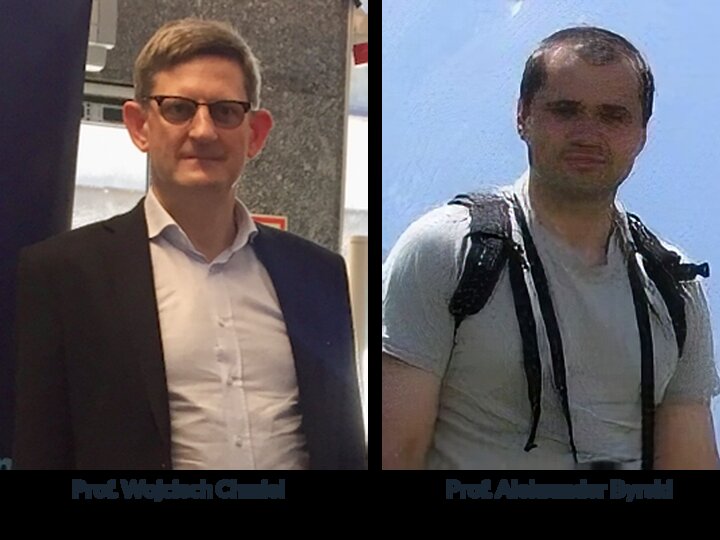
Prof. Wojciech Chmiel is a graduate of the Faculty of EAIiE (currently Faculty of Electrical Engineering, Automatics, Computer Science, and Biomedical Engineering) of the AGH University of Kraków, where he is currently employed as a professor of the university in the Department of Automatic Control and Robotics. He obtained his MSc degree in Electronics (specialisation: Automation), his PhD degree in Automation and Robotics and his habilitation degree at the AGH University of Krakow in the discipline of Automation, Electronics and Electrical Engineering. He currently heads the Operations and Systems Research Laboratory, which is part of the Department of Automatic Control and Robotics. His scientific activity is related to such areas as operational research - in particular modelling and optimisation of NP-hard problems, as well as application of artificial intelligence algorithms in medicine. His research is also related to modelling of real industrial issues, optimisation of production, process management systems, optimisation of logistic processes and traffic optimisation. He is the author of publications in the field of machine learning, as well as the application of FCM (Fuzzy Cognitive Maps) networks for risk analysis in traffic surveillance and prediction systems. He is the author of theorems on the properties of the Quadratic Assignment Problem, as well as theorems supporting decision-making in systems where uncertainty is described by interval arithmetic. Wojciech Chmiel, Ph.D., has several decades of experience in directing commercial and scientific projects abroad (USA, Germany, Austria), as well as in Poland, where, in cooperation with such international companies as Doosan and Altrad, he implemented projects integrating process management systems with augmented reality.

Prof. Aleksander Byrski works in the area of metaheuristic computing with a special focus on agent-based systems. He is also interested in simulations and computations using HPC infrastructure. In his professional work, he particularly focuses on working with students on projects, master's theses and doctoral theses, the results of which are numerous scientific publications. He has also been involved in organisational work (inside and outside the university) for many years, acting, among others, as chairman of the Ethics Committee for Research with Human Participation at AGH. He is also one of the longest-serving secretaries of the Computer Science journal and a member of the presidium of the Computer Science Committee of the Polish Academy of Sciences.

Prof. Joanna Kwiecień is a graduate of the Faculty of EAIiE (currently Faculty of Electrical Engineering, Automatics, Computer Science, and Biomedical Engineering) at the AGH University of Kraków, where she works as an associate professor in the Department of Automatic Control and Robotics. She received her PhD in 2004 in the discipline of automation and robotics, and her habilitation in engineering sciences in 2019 in the field of adaptation of swarm intelligence methods for solving discrete problems. She is a specialist in artificial intelligence methods, including swarm intelligence, operations research, systems research, and NP-hard discrete problem modelling. She has participated in several research projects. She has authored or co-authored dozens of scientific papers of national and international scope.

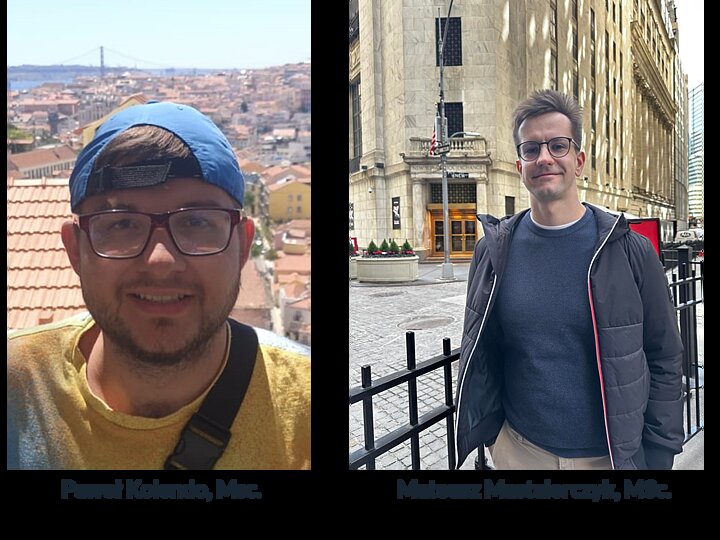
Paweł Kolendo, MSc, is a PhD student at the AGH University of Kraków. His ongoing doctoral thesis focuses on accelerating metaheuristics using GPU cards to significantly reduce computation time and increase the efficiency of algorithms. During his master's studies, he worked on anomaly detection at the synchrotron, using advanced data processing techniques such as transform networks. This allowed him to gain an in-depth knowledge of data analysis and applications of artificial intelligence in technical sciences. His research interests include:

  • Optimisation of algorithms and their implementation on GPU architectures
  • Artificial intelligence and machine learning
  • Signal processing and data analysis

The aim of his research is to develop more efficient computational methods that can be applied in various fields of industry and science.

Mateusz Mastalerczyk, MSc, works on research oriented on metaheuristic computing for solving computational problems in cyber-physical systems. His area of interest is the application of optimisation techniques and artificial intelligence to solve practical problems. Professionally, he has been involved in the integration of machine learning models for cryptocurrency investment analysis and is involved in the development of runtime environments for Generative AI and LLM.

Portfolio Optimization with Translation of Representation for Transport Problems, Malgorzata Zajecka, Mateusz Mastalerczyk, Siang Yew Chong, Xin Yao,Joanna Kwiecien, Wojciech Chmiel, Jacek Dajda, Marek Kisiel-Dorohinicki and Aleksander Byrski, Journal of Artificial Intelligence and Soft Computing Research, Volume 15

Quantum Machine Learning Team

Team members:
Prof. Piotr Gawron
Tomasz Rybotycki, PhD
Piotr Kalaczyński, PhD

Sebastian Dziura, Msc. (PhD student)

The quantum computing paradigm is fundamentally different from classical computing. The process of quantum computing involves manipulating the wave function that is the state of a quantum computer. Although quantum computers are currently installed in a large number of computing centers, it is not possible to use quantum computers to solve practical problems. This is due to the difficulty of separating the state of a quantum computer from the surrounding Universe. However, continuous progress in the development of quantum computers allows us to hope that machines created in the future will be able to solve practical problems. Quantum computing can be used in artificial intelligence, e.g. as a tool for solving machine learning tasks and combinatorial optimization. In parallel with the progress in hardware, there is a need to look for opportunities to apply quantum computing methods to practical problems that require solutions using artificial intelligence.

Piotr Gawron received his MSc in computer science from the Silesian University of Technology in Gliwice, his PhD in technical sciences from the Institute of Theoretical and Applied Computer Science of the Polish Academy of Sciences in Gliwice, and his habilitation degree from the Faculty of Automation, Electronics and Computer Science of the Silesian University of Technology in 2003, 2008 and 2014 respectively.

Prof. Piotr Gawron is a computer scientist specialising in quantum computing and artificial intelligence methods. He has managed five scientific projects in this field. He has participated in over a dozen research projects in both basic and industrial research. Professionally associated with institutes of the Polish Academy of Sciences and AGH.

For eighteen years, he was a member of the Quantum Systems of Informatics Group at the Institute of Theoretical and Applied Computer Science, Polish Academy of Sciences, Gliwice. Since his fourth year of studies, he has been involved in research in quantum computing. Previously, he was involved in research on quantum games, quantum walks, simulation of noise-laden quantum computers, quantum programming languages, quantum control, numerical shadows and tensor networks. He was the leader of the Scientific Computing and Information Technology research group at the AstroCeNT facility of the Nicolaus Copernicus Astronomical Centre, where he led research on the application of machine learning methods to the analysis of signals from gravitational wave and dark matter detectors.
He is currently studying the application of quantum machine learning to the processing of Earth observation image data, the application of quantum and classical machine learning techniques to gravitational waves and dark matter detection. He is a visiting professor at the European Space Agency in the Phi-lab@ESRIN laboratory in Italy.

He is involved in popularising science at fantasy conventions. He is co-author of a comic book on quantum computing entitled. ‘State Revolution - A Fantastic Introduction to Quantum Computer Science’.

  • Piotr Gawron is a member of the Scientific Committee of the Institute of Theoretical and Applied Informatics of the Polish Academy of Sciences
  • Member of the Polish Information Processing Society - Mazovia Branch.
  • Member of the Einstein Telescope team
  • Reviewer of scientific articles in IEEE JSTARS, IEEE Geosci. Remote. Sens. Lett., OSIP, TEIS, RSOS, IJQI, JPHYSA.
  • Member of Programme Committee of  Quantum Computing Thematic Track on International Conference on Computational Science.
  • Representative of CAMK PAN in the Lumi-Q consortium


Tomasz Rybotycki, PhD obtained his doctoral degree in engineering sciences in the discipline of technical informatics and telecommunications in 2023 at the Systems Research Institute of the Polish Academy of Sciences in Warsaw. His supervisor was Professor Piotr Kulczycki.

During his PhD, Tomasz Rybotycki worked on predictive density estimation of non-stationary streaming data, where he designed an algorithm based on a kernel density estimator for predictive data density estimation. The title of his PhD thesis was ‘Data density estimation for non-stationary streaming data’. During his doctoral studies, he also obtained a bachelor's degree in physics, after successfully defending his undergraduate thesis entitled ‘Framework for performing experiments on IBM Quantum Computers’.

Since 2017, PhD Rybotycki has been working at the Systems Research Institute of the Polish Academy of Sciences, currently as an assistant professor.

In 2020, PhD Rybotycki was awarded a research fellowship at AstroCeNT, where he researched the application of metaheuristics to learning quantum neural networks. In the same year, he started working at the Center for Theoretical Physics of the Polish Academy of Sciences, first as a researcher/software engineer and then as a PhD student (theoretical physics) in the project. He left the Center for Theoretical Physics in 2022.

In 2022, PhD Rybotycki joined ACK Cyfronet AGH, where, as a senior programmer, he is responsible for developing an e-platform for automated quantum machine learning.

PhD Rybotycki rejoined AstroCeNT (and later CAMK) in 2023. He is currently working on quantum machine learning with Prof. Piotr Gawron. His research focuses on optimising quantum circuits using ZX calculus and applying (Q)ML techniques to Earth observations.

PhD Rybotycki is currently working at the AGH Center of Excellence for Artificial Intelligence, where he focuses on quantum data fusion as part of the ARTIQ project.


Since 2023, Piotr Kalaczyński has been employed at the Nicolaus Copernicus Astronomical Center of the Polish Academy of Sciences as a specialist development technician. He started working at the AGH University of Krakow in the Quantum Computing Team in 2024 and works on machine learning in application to autonomous vehicles.

He received his PhD in physics in 2024 from the National Center for Nuclear Research in Warsaw, where he worked on the KM3NeT experiment, which builds underwater Cherenkov neutrino telescopes at the bottom of the Mediterranean Sea. His work focused on simulations and modeling of muons from cosmic ray interactions observed by the KM3NeT detectors and is available at arXiv:2402.02620. During his doctoral studies, Piotr Kalaczyński also participated in work on the reconstruction of the Super-Kamiokande detector in Japan and related to its planned successor, Hyper-Kamiokande. He earned his master's degree at RWTH Aachen, where he analyzed neutrino data from the IceCube neutrino telescope, located at the South Pole. While at Aachen, he was also involved in conducting exercises and laboratory classes for younger students. His studies at the Lodz University of Technology were combined with a year as an exchange student at the ETH in Zurich.


Mgr inż. Sebastian Dziura is a PhD candidate at the Faculty of Computer Science at the AGH University of Science and Technology in Krakow. As part of his doctoral research, he investigates techniques such as quantum neural networks, quantum kernel methods, and classifiers based on quantum annealing. He explores applications of these methods in the classification of multimodal data comprising images and time series. His research focuses on developing quantum machine learning methods for the classification of multisource data. The aim of his work is to design quantum machine learning techniques that outperform classical methods for such problems.

Mgr inż. Sebastian Dziura is a graduate of the Automation and Robotics program at the Faculty of Electrical Engineering, Automatics, Computer Science, and Biomedical Engineering at AGH. He has several years of experience as an IT systems consultant, including responsibilities for implementing supply chain management systems.

Rybotycki, T., Białecki, T., Batle, J., Tworzydło, J., & Bednorz, A. (2025). Cross-platform certification of the qubit space with a minimal number of parameters. arXiv. https://arxiv.org/abs/2404.06792

Batle, J., Białecki, T., Rybotycki, T., Tworzydło, J., & Bednorz, A. (2025). Efficient discrimination between real and complex quantum theories. Quantum, 9, 1595. https://doi.org/10.22331/q-2025-01-15-1595

T. Rybotycki, T. Białecki, J. Batle, A. Bednorz, Violation of No-Signaling on a Public Quantum Computer. Adv Quantum Technol. 2025, 2400661. https://doi.org/10.1002/qute.202400661

T. Rybotycki, T. Białecki, J. Batle, A. Bednorz, Device-Independent Dimension Leakage Null Test on Qubits at Low Operational Cost. Adv Quantum Technol. 2025, 8, 2400264. https://doi.org/10.1002/qute.202400264

Batle, J., Białecki, T., Rybotycki, T. et al. Quantum null-hypothesis device-independent Schmidt number witness. EPJ Quantum Technol. 11, 62 (2024). https://doi.org/10.1140/epjqt/s40507-024-00273-7

Mazur, D., Rybotycki, T., & Gawron, P. (2025). Hyperspectral image segmentation with a machine learning model trained using quantum annealer. arXiv. https://arxiv.org/abs/2503.01400

Observation of an ultra-high-energy cosmic neutrino with KM3NeT / S. Aiello, [et al.], P. KALACZYŃSKI, [et al.] // Nature — 2025 — vol. 638, s. 376–382 https://www.nature.com/articles/s41586-024-08543-1

Explainability and Unsupervised Learning Team

Team members:
Prof. Marcin Kurdziel
Prof. Jacek Mańdziuk

One important class of machine learning methods are unsupervised learning algorithms. These algorithms use the data structure itself in the learning process, without the need to manually label individual examples. As a result, they can be trained on huge data sets. In recent years, unsupervised learning has contributed to unexpectedly rapid advances in certain areas of artificial intelligence, especially in the issues of understanding and processing natural language. However, there are significant challenges associated with these successes. Currently built neural models have a large number of active parameters, which negatively affects the cost of training and inference. For many important applications of artificial intelligence methods, for example data including video material, satisfactory results have not yet been achieved. Finally, hidden representations created by popular neural models are often entangled, not having a clear reflection in the concepts from the area of ​​the problem being solved. To address these challenges, the team is conducting research on new models and algorithms for unsupervised and self-supervised learning. These cover efficient neural models for selected machine learning problems, multimodal learning issues and representation learning algorithms.

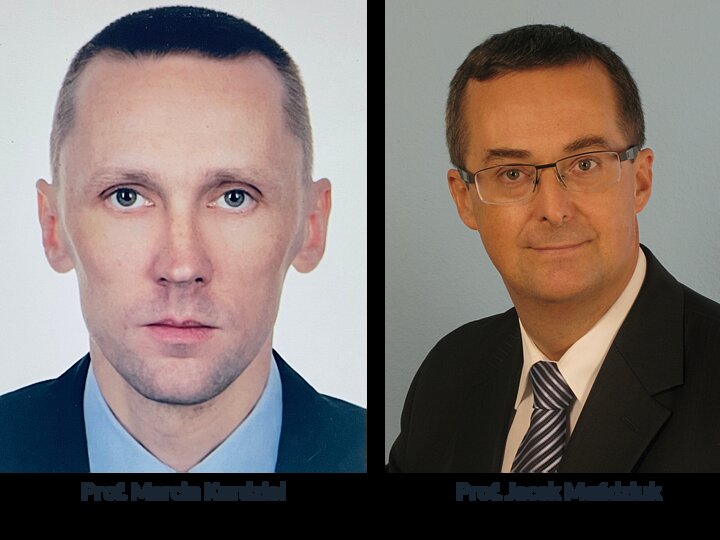
Prof. Marcin Kurdziel, has been conducting research in the area of artificial neural networks and representation learning algorithms for many years. Among other things, he has worked on algorithms for probabilistic representation analysis in neural networks, text embedding methods and machine learning algorithms for very high-dimensional data. Dr Kurdziel has co-authored a number of scientific papers in the area of machine learning and deep neural networks. Among others, he has presented his results at leading AI conferences such as Neural Information Processing Systems and the AAAI Conference on Artificial Intelligence. In addition to academic research, Dr Kurdziel is also active in research and development projects related to pattern recognition in time series and image processing.

Prof. Jacek Mańdziuk is a professor at the Faculty of Computer Science, AGH University of Krakow and Professor at the Faculty of Mathematics and Information Sciences, Warsaw University of Technology, Head of the Department of Artificial Intelligence and Computational Methods and Head of Doctoral Studies in Computer Science at this Faculty. He is the author of 3 books and over 200 scientific articles. He was a Fulbright Foundation Senior Fellow (University of California Berkeley and ICSI Berkeley, USA), a Robert Schuman Foundation Fellow (CNRS, Besancon, France) and a Visiting Professor at Nanyang Technological University, Singapore (2015-2016). He is a member of the Council for Scientific Dissertation (2024-2027), the Committee on Informatics of the Polish Academy of Sciences (since 2020), the Scientific Councils of IBS PAN and NASK. He has promoted 9 PhDs. He has repeatedly presented the results of his research at seminars in prestigious scientific centres. Among others, Harvard University, University of California Berkeley, Carnegie Mellon University, Nanyang Technological University, Seoul National University, National University of Singapore, University of Alberta, and others. His research interests include the application of artificial intelligence and machine learning methods to two-level optimisation problems, self-supervised learning, abstract reasoning problems, human-machine collaboration, and games. He is also interested in developing learning and problem-solving methods that mimic those used by humans. For more information, visit www.mini.pw.edu.pl/~mandziuk.

Żychowski, A., Perrault A., Mańdziuk, J.: Coevolutionary Algorithm for Building Robust Decision Trees under Minimax Regret, Proceedings of the AAAI Conference on Artificial Intelligence (2024)

Stopka